Vizag institute gets support to pursue radiation-based concrete research in U.S.
VISAKHAPATNAM: Research by the Visakhapatnam-based Institute for Solid Waste Research and Ecological Balance on radiation-modified concrete materials has received support from the U.S. Consulate, which advised the institute to pursue its work at universities and institutes in the United States.
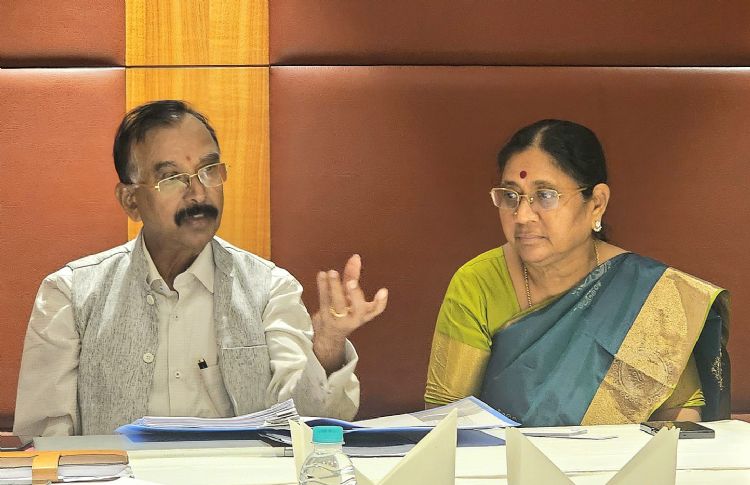
Addressing media persons here, INSWAREB founders Dr. N. Bhanumathidas and N. Kalidas, who have more than four decades of experience in blended cement concretes, said deterioration of concrete in nuclear structures is linked to radiation. Global studies have shown that radiation converts crystalline quartz in aggregates to an amorphous state, triggering internal expansion, cracking, and eventual deterioration.
The founders said the phenomenon could be harnessed to enhance grade strength and durability of blended cement concrete. They have proposed manufacturing 'Irradiated Cementitious Composite Materials' from industrial byproducts such as fly ash and Rice Husk Ash.
They estimate ICCMs could raise grade strengths of cement and concrete elements to 65'85 MPa or higher. Alternatively, ICCMs could double or triple cement output through blending, without expanding clinker capacity.
Irradiation would create amorphized silica that can replace silica fume, a material priced at $400'$600 per tonne for its role in high-performance concrete. Using amorphized RHA as a silica fume substitute would also support the rural economy by aiding rice husk-based boilers and allied activities, they said.
To produce bulk samples of 10'40 kg of ICCMs for concrete studies, the institute has identified the Advanced Test Reactor at Idaho National Laboratory and applied for permission.
Dr. Brenden Heidrich, Director of the U.S. Nuclear Science User Facilities, advised INSWAREB to approach American institutes or universities for faster access to the ATR, the founders said.
|